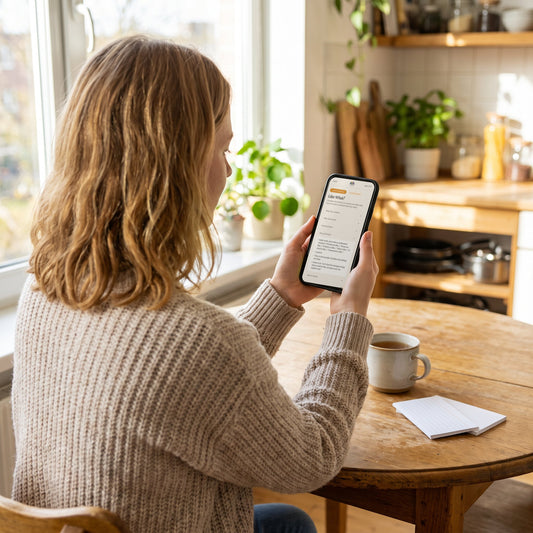
Indoor activities for preschoolers have one job on a wet Tuesday: get you both to lunch in one piece. The ones that hold a three- or four-year-old's attention longest are often the ones that give them something to figure out.
Good indoor activities for preschoolers are hands-on and open-ended: a blanket fort, a block bridge, an obstacle course, a sorting game, a pretend café. The best ones give your child a small problem to solve and room to lead, with you nearby to set it up and ask questions rather than direct.
Below are twelve ideas using what's already in your house, each with the thinking skill it practises, and what the research says about setting them up.
Why open-ended indoor play matters as your child grows up
Play your child directs gives them practice at setting their own goals and sticking to them. In a 2014 University of Colorado Boulder study of 6- and 7-year-olds, children who spent more of their time in less-structured activities were better at directing their own behavior toward a goal, and more time in structured activities went the other way. The study is correlational and with slightly older children, but it fits what many parents notice: playing independently gets easier with practice.
Hands-on building and fitting also goes with later learning. A 2012 University of Chicago study found that children who did more puzzles at home between 2 and 4 were later better at mentally turning and fitting shapes, and a 2017 study found that 3-year-olds who were better at copying a block model had stronger math skills at 5. Both are correlational, so they show a link, not a guarantee.
These are the same kinds of thinking that last into adult life. In the World Economic Forum's Future of Jobs Report 2025, employers ranked analytical thinking first (69%) and creative thinking high (57%) among core skills.
How much should you set up and how much should you leave?
Set up the challenge, then step back. A 2022 University of Cambridge meta-analysis of 17 studies found that guided play, where an adult sets up an activity and nudges while the child leads, did better than direct instruction for early math, shape knowledge and switching between tasks. A 2011 MIT study found that when preschoolers were shown exactly how a toy worked, they explored less and discovered less than children who weren't shown.
In practice: put the materials out, give one starting question ("Can you make a bridge for the car?"), and let your child take it from there. Join in when invited, and ask questions more than you give instructions.
Indoor activities for preschoolers to try today
Each uses household things and runs as long as your child is interested. The skill in brackets is what it mostly practises.
- Blanket fort. Chairs, a blanket, cushions. Your child decides where the door goes and what holds the roof up. (Creative thinking, problem solving)
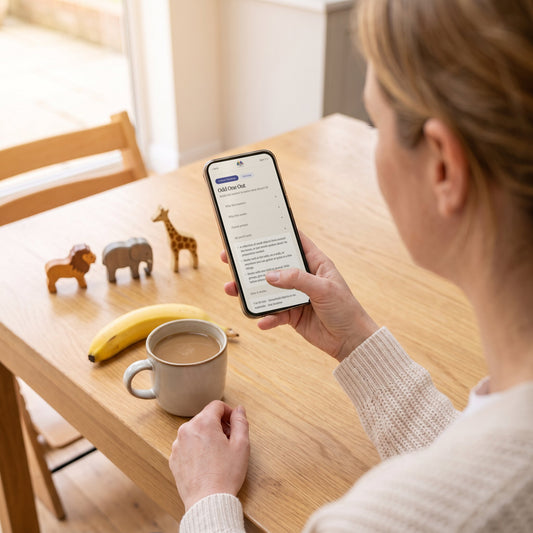
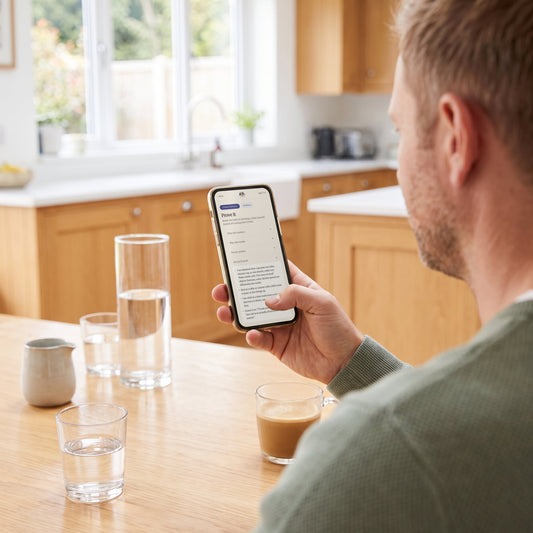
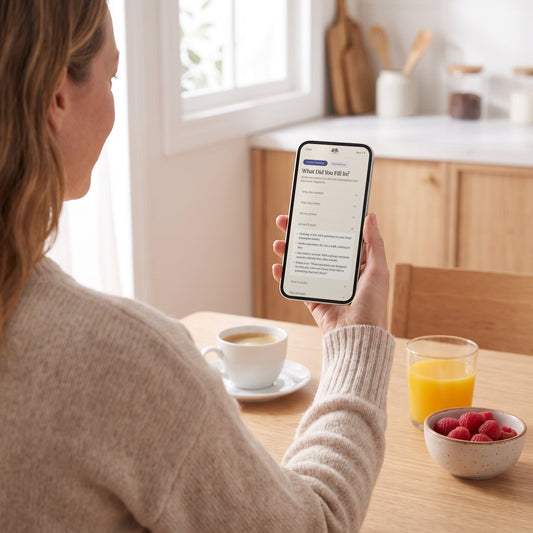
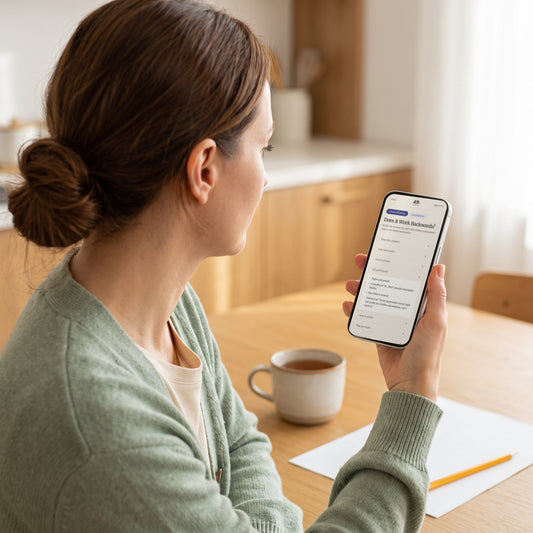
- Obstacle course. Cushions to jump, a table to crawl under, a line of tape to walk. Let your child design the route and test it. Obstacle Course Design has a version. (Planning, adaptability)
- Sorting station. A pile of socks, buttons or toy animals, and a few bowls. "How could we sort these?" Let your child pick the rule. Sorting Station walks through it. (Critical thinking)
- Block bridge. Two books apart and a toy car that needs to cross. Bridge Builder has variations. (Problem solving, systems thinking)
- Pretend café. A tea towel apron, plastic cups, a menu your child "writes." Take orders, pay with buttons. (Creative thinking, social skills)
- Sink science. A bowl of water, a spoon, a cork, a coin, a leaf. "Which will float?" Guess first, then test. Mini Experiments has more ideas. (Curiosity)
- Mystery bag. Put an object in a pillowcase. Your child feels it and guesses with questions. Mystery Box is a ready-made version. (Curiosity, critical thinking)
- Puzzle time. A simple jigsaw, talked through: "This one has a straight edge. Where do straight edges go?" (Spatial thinking)
- Sock basketball. Rolled socks and a laundry basket. Move the basket back after each round. (Adaptability, persistence)
- Treasure hunt. Hide a toy and give clues: "It's somewhere soft and blue." (Critical thinking)
- Playdough challenge. "Can you make something that stands up on its own?" Then something taller. (Problem solving)
- Dance and freeze. Music on, dance, freeze when it stops. Harder each round. (Self-control)
Indoor activities for 3 year olds and 4 year olds
The same activities work across ages; the difference is how much you set up.
- Indoor activities for 3 year olds: keep the problem small and concrete (a car, a bridge, two books) and stay close. Fort building, sink science and sock basketball are easy starts.
- Indoor activities for 4 year olds: add a step and step back more. Let your child plan the obstacle course, choose the sorting rule, or run the café.
On a long run of rainy day activities for preschoolers, rotate a few rather than adding new ones every day. Coming back to the same fort or course lets your child build on what they did last time.
What parents can do today
- Set it up, then step back. Materials out, one question, then let your child lead.
- Hold back the demonstration. Show the problem, not the solution.
- Leave some time unplanned. Not every hour needs an activity; some of the best play starts when you don't suggest anything.
- Ask, don't direct. "What could hold the roof up?" keeps the thinking with your child.
- Rotate, don't refresh. A few favorite set-ups, repeated, beat a new idea every hour.
It won't all go to plan. Some days the fort collapses in two minutes and nobody wants to rebuild it. That's a normal preschool afternoon.
Raising Future Thinkers | Ages 3–4 has thirty five-minute, screen-free activities across six thinking skills, each built on a named study and written so you can run it after one read.
FAQ
What can I do with my preschooler indoors on a rainy day?
Try open-ended set-ups that use what you have: a blanket fort, an obstacle course of cushions, a sorting game with socks, a block bridge for a toy car, or a pretend café. Rotate a few favorites rather than looking for something new each time.
How do I keep my preschooler busy indoors without running every minute?
Set up one open-ended challenge, give one starting question, and step back. A 2014 study found that children who spent more time in less-structured activities were better at directing their own behavior toward a goal.
Should I join in or let my child play alone?
Both. Set up the activity and stay nearby, join in when invited, and ask questions rather than giving instructions. A 2022 meta-analysis found this kind of guided play beat direct instruction for some early skills.
Which indoor activities build thinking skills?
Activities with a small problem to solve: building a bridge, sorting by a rule, testing what floats, guessing an object by feel. Each practises a skill like problem solving, critical thinking or curiosity.
What indoor activities work for 3-year-olds?
Simple, concrete ones with you close by: a blanket fort, sink science with a bowl of water, sock basketball, a big-piece puzzle. Add steps as your child gets older.
Sources
- Skene, K., O'Farrelly, C., Byrne, E. M., Kirby, N., Stevens, E. C. & Ramchandani, P. G. (2022). Can guidance during play enhance children's learning and development in educational contexts? A systematic review and meta-analysis. Child Development, 93(4), 1162–1180. https://ueaeprints.uea.ac.uk/id/eprint/90660
- World Economic Forum (2025). The Future of Jobs Report 2025, ch. 3, Skills outlook. https://www.weforum.org/publications/the-future-of-jobs-report-2025/in-full/3-skills-outlook/
- Verdine, B. N., Golinkoff, R. M., Hirsh-Pasek, K. & Newcombe, N. S. (2017). Links between spatial and mathematical skills across the preschool years. Monographs of the Society for Research in Child Development, 82(1). https://modules.ilabs.uw.edu/module/spatial-skills-and-reasoning/spatial-skills-and-early-math-ability/
- Barker, J. E., Semenov, A. D., Michaelson, L., Provan, L. S., Snyder, H. R. & Munakata, Y. (2014). Less-structured time in children's daily lives predicts self-directed executive functioning. Frontiers in Psychology, 5, 593. https://pmc.ncbi.nlm.nih.gov/articles/PMC4060299/
- Levine, S. C., Ratliff, K. R., Huttenlocher, J. & Cannon, J. (2012). Early puzzle play: a predictor of preschoolers' spatial transformation skill. Developmental Psychology, 48(2), 530–542. https://news.uchicago.edu/story/puzzle-play-helps-boost-learning-important-math-related-skills
- Bonawitz, E., Shafto, P., Gweon, H., Goodman, N. D., Spelke, E. & Schulz, L. (2011). The double-edged sword of pedagogy: instruction limits spontaneous exploration and discovery. Cognition, 120(3), 322–330. https://pmc.ncbi.nlm.nih.gov/articles/PMC3369499